Module 06
Alongside Each Other - The Art of CRT Facilitation
The art of CRT facilitation: alongside each other in transformative community spaces.
Community Relational Training
Community Relational Training facilitation especially in transformative, community spaces requires extraordinary care, maturity, and integrity.
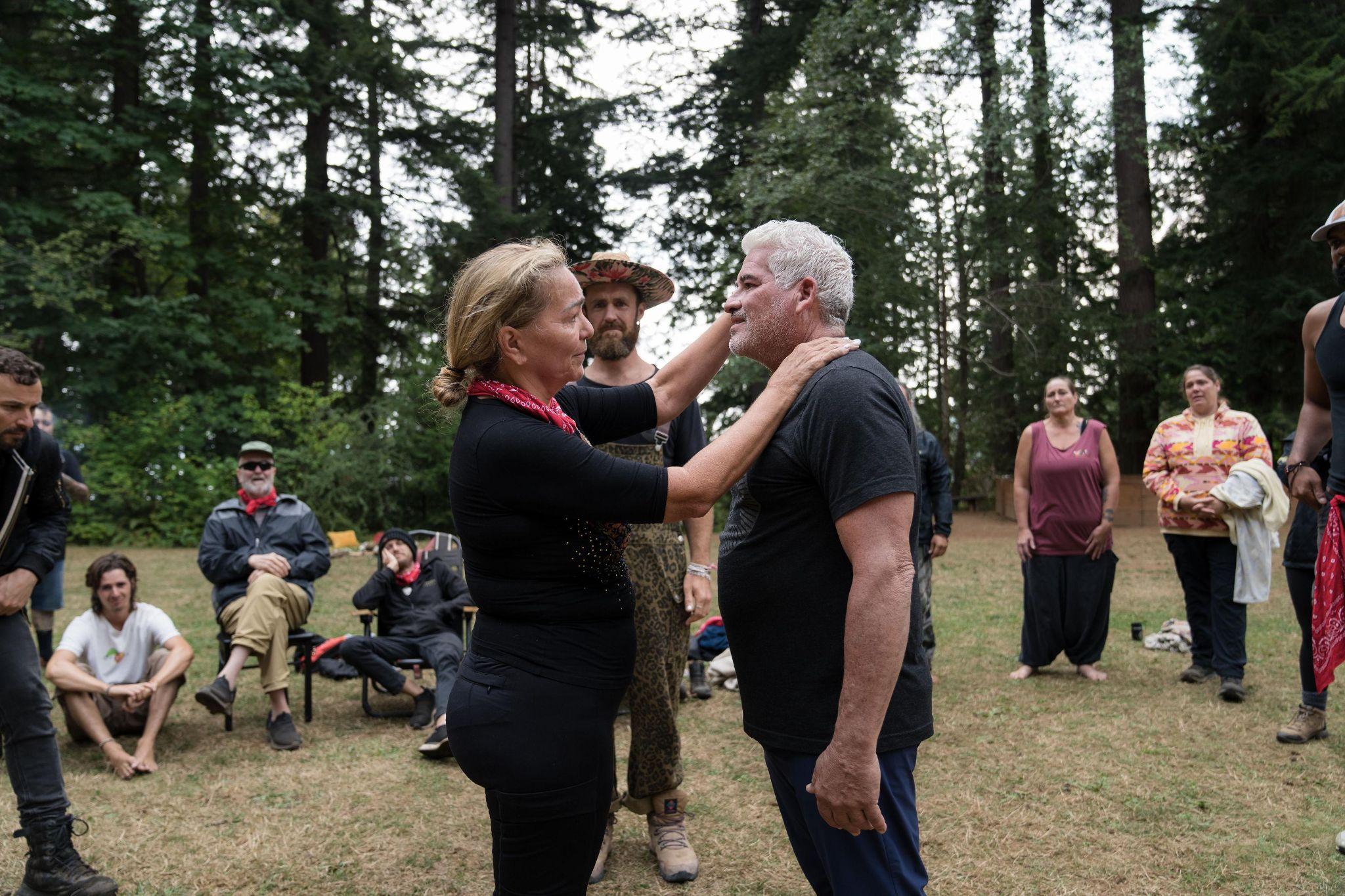
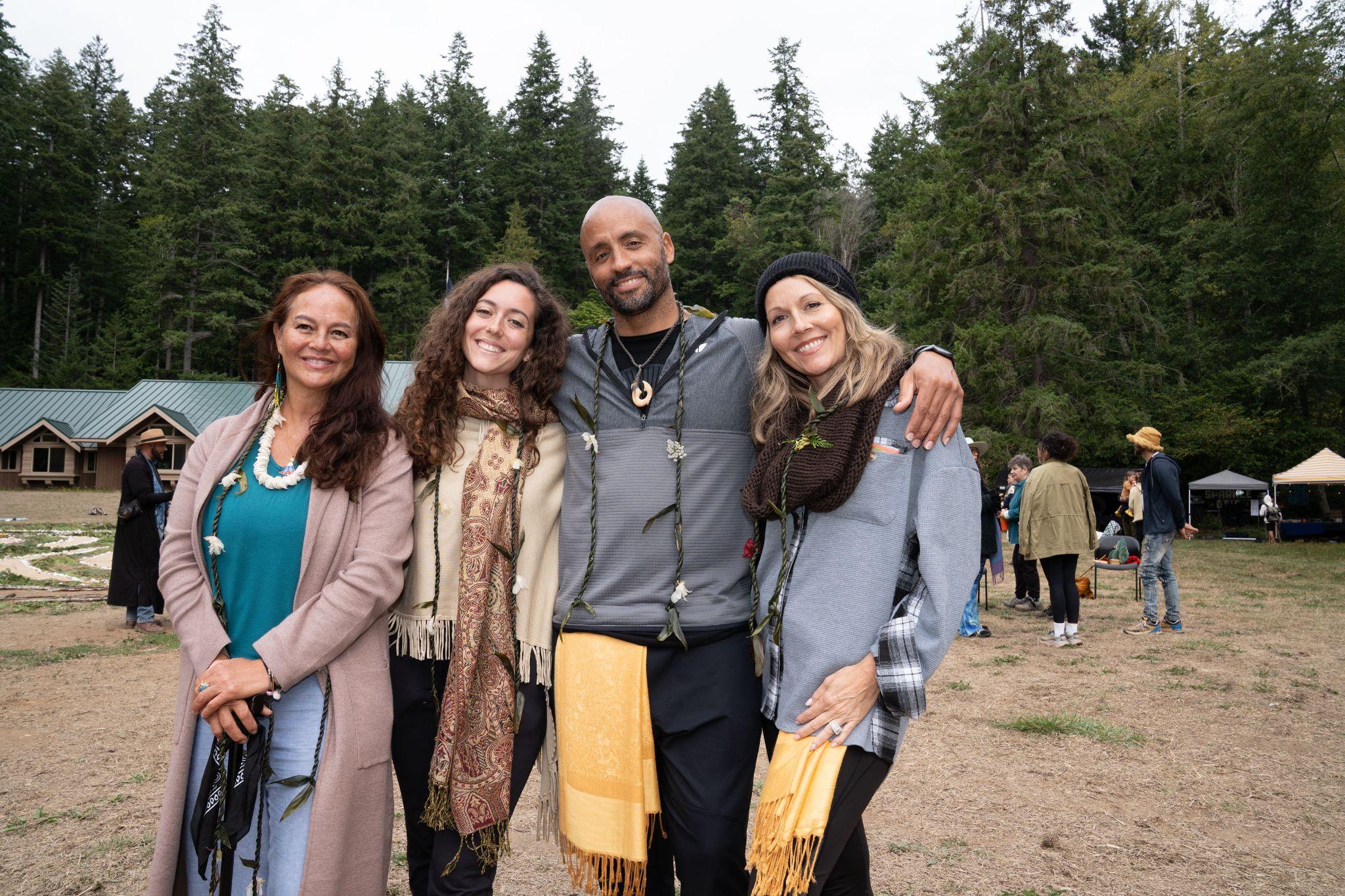
The balance of representation in facilitation from a female and male lead facilitator, is what makes this offering unique and greatly needed. CRT facilitation especially in transformative, community spaces requires extraordinary care, maturity, and integrity. When WE facilitate together with awareness and respect, we demonstrate a different way of being in relationship:
- Listening without defensiveness
- Honoring emotional truth without collapsing into blame
- Sharing leadership rather than competing for authority
- Practicing accountability while maintaining dignityWhen this is done well, it creates a container where all genders feel safe, respected, and empowered to heal and connect. When done poorly, it can unconsciously replicate the very harm it seeks to heal. We are not here to repeat or retraumatize individuals - period.
Unethical facilitation often arises from:
- Unconscious power imbalances between co-facilitators
- Lack of trauma-informed care
- Ignoring consent and emotional safety
- Fails to manage transference/countertransference and protect emotional safety.
- Lacks accountability or system of repair
- Risks long-term harm, retraumatization, and loss of trust in healing spaces.
How do we ensure that we have a true partnership with our co-lead? Communication and building the relationship of trust and commitment is where we start. We also can review the following:
- Check power dynamics (are roles equal or skewed?)
- Practice transparent communication & rupture repair behind the scenes
- Never undermine each other in front of the group
- Balance voice, presence, and leadership styleTip: The facilitator relationship models the relational dynamics you’re teaching—make it conscious, accountable, and humble.
Co-ed facilitation lives at a delicate and powerful edge—the meeting place of difference, projection, history, and possibility. It is a space where multiple lived realities converge, shaped by gender, culture, power, and personal experience. Facilitators must establish strong agreements around consent, voice, and respect, while actively tracking group dynamics and intervening when imbalance or harm arises. The facilitator’s role is not to erase difference, but to name, hold, and work with it consciously. In this way, co-ed facilitation becomes not only a container for healing, but a living practice of cultural transformation.
The results of ethical co-ed facilitation will heals collective wounds of the group by:
- Rebuilding trust between genders
- Reclaiming healthy masculine/feminine expression
- Creating spaces where everyone feels seen, valued, and empowered
- Modeling what conscious community and relationship can look like
Journal Prompts
Please be thorough with your responses. We suggest trying to express at minimum 100 words per prompt. Your answers will be emailed to you for your own records.
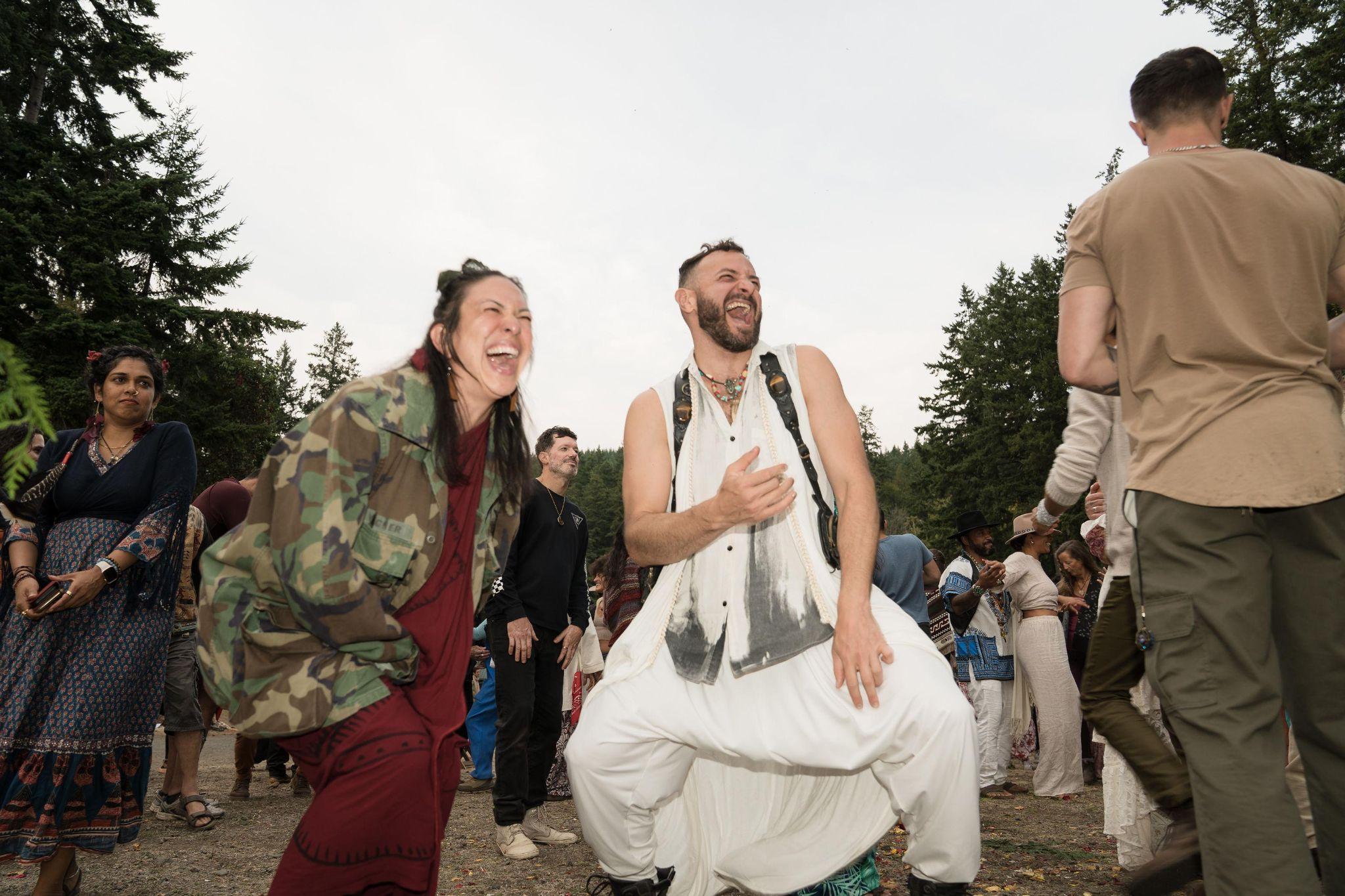
Equal representation in co-ed processes is not simply a matter of fairness—it is a condition for psychological safety, relational integrity, and truthful dialogue. When a space reflects balance across genders, it reduces the likelihood that one perspective unconsciously dominates, allowing a wider range of voices, experiences, and ways of knowing to emerge.
If you are holding a co-ed container, it is wise to ensure you have equal representation to ensure an equal transformative experience for all.
Five Common Mistakes in Mixed-Gender Healing Spaces
(And How to Avoid Them)
Even experienced facilitators can unintentionally create tension or confusion in mixed-gender spaces. Conversations around gender, trauma, power, and lived experience carry emotional weight, and the facilitator’s role is to guide the process with clarity and care.
The following are common mistakes that arise in relational spaces between men and women—and how skilled facilitators respond.
Rushing Toward Harmony
When strong emotions arise, facilitators sometimes try to smooth things over too quickly. While the intention may be to restore calm, rushing toward harmony can silence important truths.
What to remember: Authentic repair requires time for truth, emotion, and listening. The goal is not immediate agreement—it is deeper understanding.
Exploring and Re-orienting to lived experience
Mixed-gender conversations can easily shift into argument or defensiveness, particularly when people feel misunderstood or blamed.
Asking One Gender to Carry the Teaching
Sometimes facilitators unintentionally place the responsibility for educating the group on one gender—for example, expecting women to explain women’s experiences, or men to represent all men.
What to remember: No individual speaks for an entire group. Each participant shares only their own lived experience.
Ignoring Nervous System Responses
When emotions rise, people’s nervous systems respond in different ways—fight, flight, freeze, or shutdown. If facilitators overlook these signals, conversations can escalate or participants may feel overwhelmed.
What to remember: Trauma-informed facilitation includes slowing down, grounding the room, and helping participants return to regulation before continuing the process.
Confusing Facilitation with Therapy
There is a difference between facilitation and therapy — and it matters. Facilitators are not here to solve someone's pain or lead them through deep personal healing. Yet what happens in this space is undeniably real. Participants often experience something profound: a somatic shift, a moment where the body releases what the mind has long been carrying.
What to remember: The facilitator’s role is not to fix or analyze participants. It is to hold a respectful container where people can be heard, witnessed, and supported by the collective process.
Facilitator Response When Conflict or Emotional Intensity Escalates
In authentic relational work, moments of tension, conflict, grief, or anger are not signs that something has gone wrong. In many cases, they are signs that the group is approaching meaningful material. However, when intensity rises too quickly or participants become overwhelmed, the relational container can begin to destabilize.
"Let’s pause for a moment. I’m noticing the energy in the room becoming more intense. Let’s take a breath together and slow this down so we can hear each other clearly."
This kind of intervention does not silence emotion. Instead, it protects the relational container so emotion can be expressed without harm.
It is also important for facilitators to remember that they are not responsible for carrying or resolving every emotional experience that arises. Their role is to guide the process, reinforce boundaries, and ensure that everyone is treated with dignity and respect.
When conflict is held with clarity, structure, and compassion, it can become one of the most powerful moments of growth in a group. Participants witness that disagreement, anger, grief, or pain can be expressed without destroying the relationship. In these moments, communities begin to learn a new pattern—one where difficulty becomes an opportunity for deeper understanding rather than disconnection.
Journal Prompts
Please be thorough with your responses. We suggest trying to express at minimum 100 words per prompt. Your answers will be emailed to you for your own records.
The Presence of Female Leadership
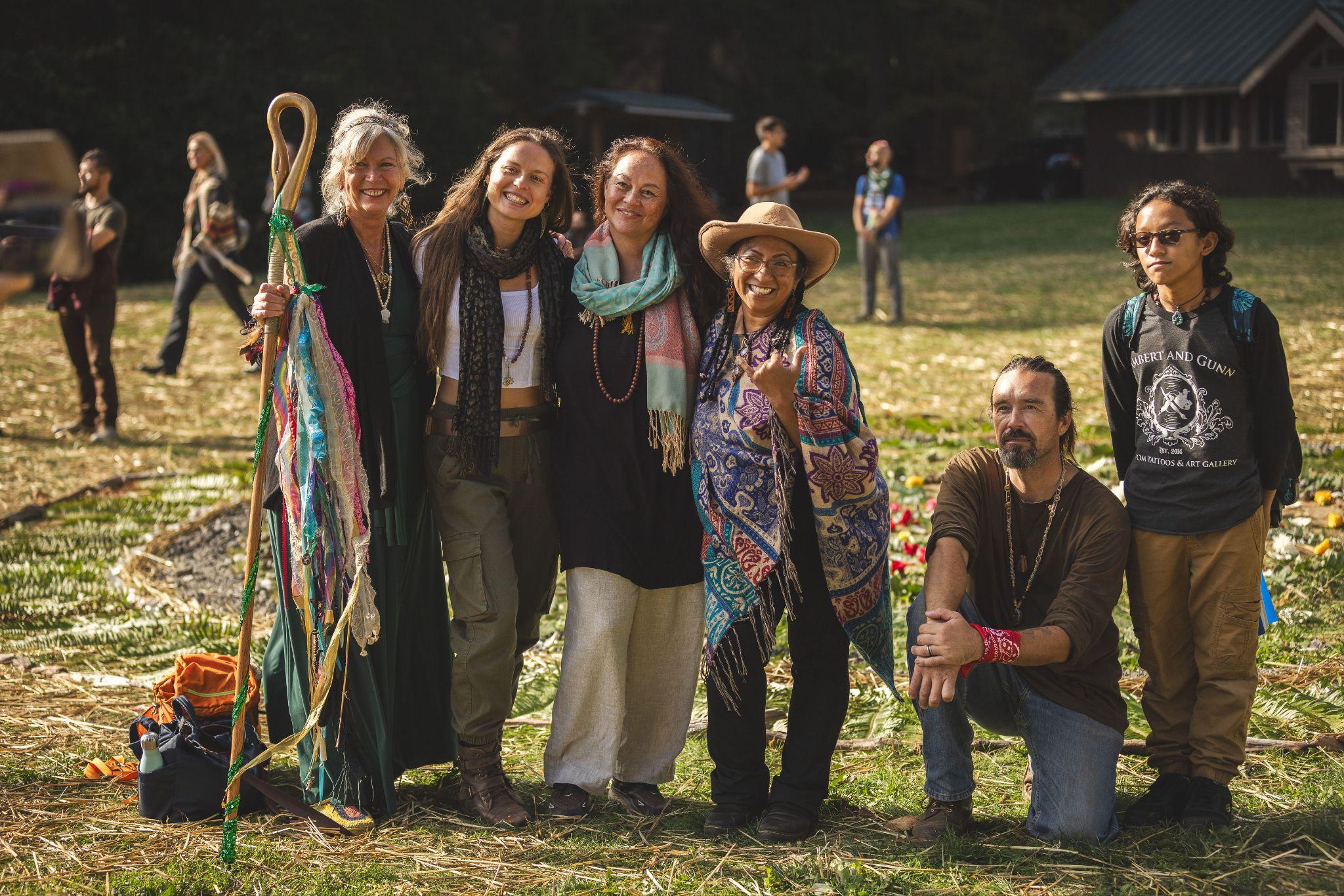
The Feminine as Foundation of Safety
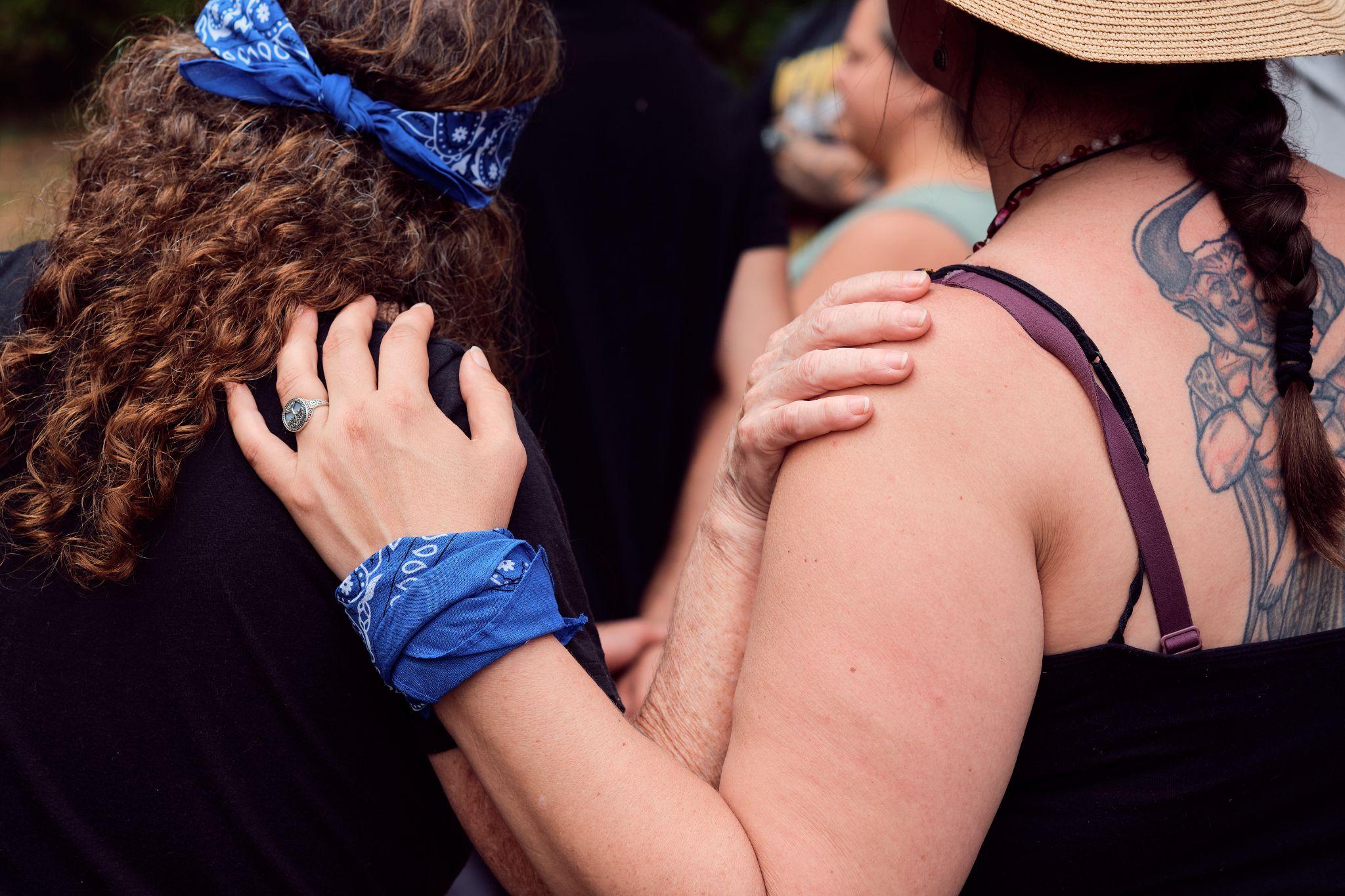
Healing requires vulnerability. Vulnerability requires safety. And safety, in its deepest form, is a feminine gift. This does not assume that all women are safe, rather the awareness that a healed feminine presence can hold the energy of compassion and grace. A woman's presence — particularly in leadership — establishes a felt sense of relational safety that is distinct from what masculine authority typically provides. Where masculine leadership often creates safety through structure, clarity, and boundary (the container itself), feminine leadership creates safety through attunement, warmth, and receptivity (the quality of what lives inside the container).
When participants — regardless of gender — feel a woman truly seeing and witnessing them, not fixing them, not directing them, something in the nervous system relaxes at a primal level. This is the safety of being held, not just guided. Here we develop capacity.
Facilitating as a female lead in a co-ed container is the opportunity for tending a sacred threshold of balance and empowerment. When we experience the support of the engaged masculine heart, our whole body reacts with strength and courage. For some of us, this may be one of the most empowering and humbling opportunities we’ve ever experienced. It takes a tremendous amount of reverence, respect and compassion to step into this leadership space. It will ask you to lean into that growing edge, and especially ask you to heal all areas of your life connected to the masculine. Your upbringing, your masculine role models, your relationships with the masculine, your own inner masculine. It will ask you to review how you were conditioned, your behaviors, habits, fears and celebrations with the masculine. All of this comes into review when you begin the journey of co-partnering with the masculine. This is an ongoing process and one that will only deepen with awareness and compassion for self. Be as present as you can be in this space, be honest to what's possible.
The importance of this work lies in the reclamation and sovereignty of ancient women’s wisdom. The presence of a female co-led can add to a new layer of exploration for the participants. Within this context, the presence of a female facilitator offers a subtle yet profound layer of regulation and resonance. It is not that safety is guaranteed by gender, but that shared embodiment can soften vigilance, reduce perceived threat, and support relational repair in areas that might not be possible otherwise. Some women express, they wouldn’t feel ‘safe’ if they weren’t guided by a female facilitator. In this instance, the male facilitator would support the female facilitator to take the lead of the individual group process and be ready for cues and ways to support. They would also pay attention to the group dynamics and somatic examples of dissociation that may or may not come from participants. This is a learning edge for many of us, especially if we haven’t fully healed our relationships within our lives.
Ways in which women lead
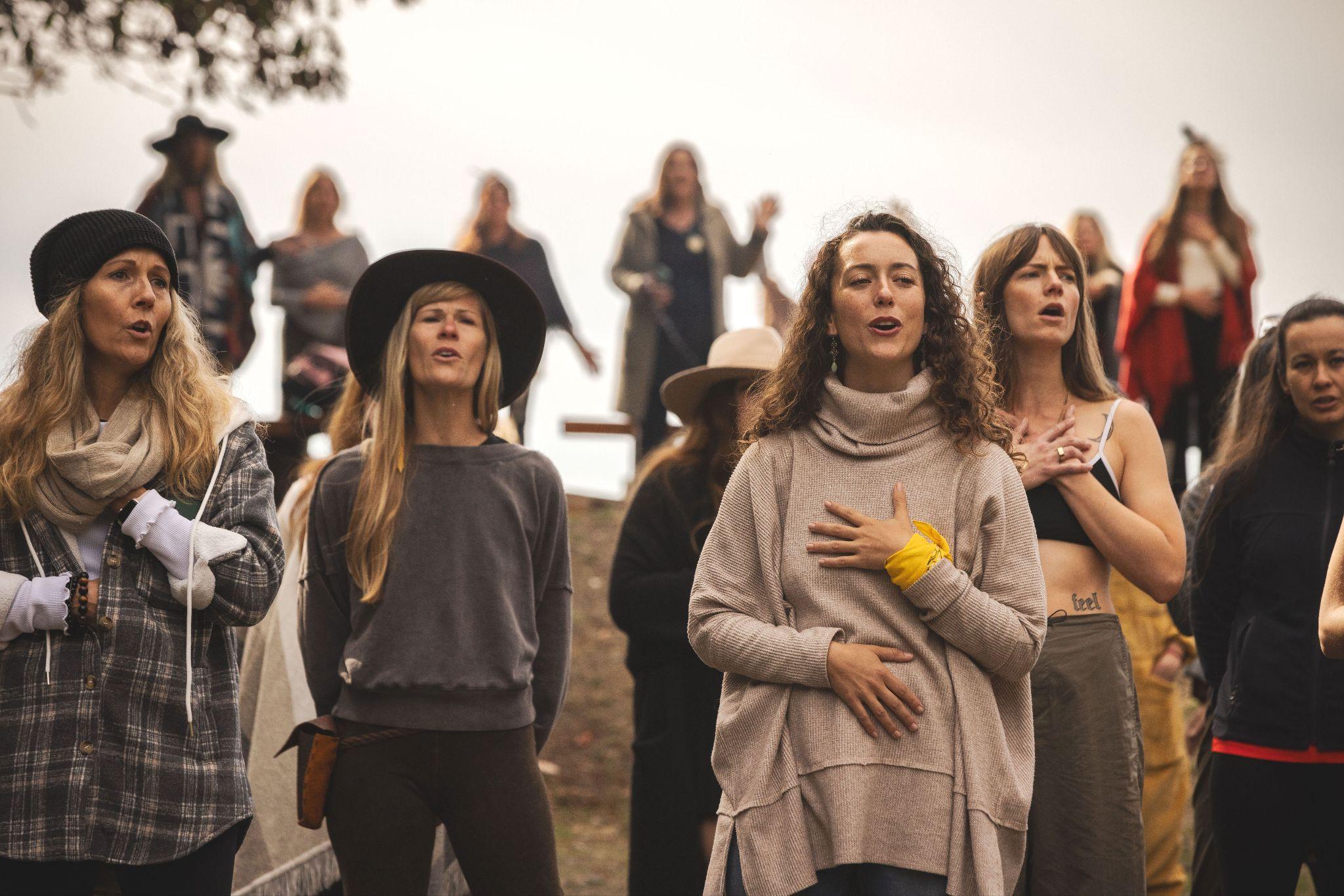
The Female Lead Embodying Vulnerability in Co-Ed Healing Spaces
Vulnerability from a female facilitator is not weakness on display — it is strategic, boundaried, and purposeful. It is the difference between leaking and offering. When a woman in leadership chooses to be vulnerable, she is not losing authority — she is demonstrating that depth and power can coexist. She is showing the room what it looks like to be fully human and fully capable at the same time. This is perhaps her most potent teaching.
The Distinction: Leaking vs. Offering
Before the examples, this distinction matters deeply.
Leaking is an unprocessed emotion that spills into the space and asks participants — consciously or not — to hold her. It contracts the room and subtly reverses the caregiving dynamic.
Offering is a moment of authentic feeling, consciously shared, that serves the group's process — that opens a door, grants permission, or names something that needed naming. It expands the room.
Everything below lives in the territory of offering.
This is ancient work. Women have usually been the keepers of the emotional relational field — the ones who gave birth, were the nurturers, the ones who tracked the emotional temperature of the tribe, who tended the wounded, who wove community back together after rupture. What is new is the conscious, boundaried, skilled expression of these gifts in structured healing spaces — and the recognition that these qualities are not soft additions to the work. The female lead in a co-ed healing container is not simply a facilitator with a particular skill set. She is a living transmission. Every time she allows herself to be moved without being swept away, every time she speaks truth with tenderness, every time she holds a boundary from love rather than fear — she is demonstrating to an entire room of people what it looks like to be fully human and fully powerful at the same time.
Journal Prompts
Please be thorough with your responses. We suggest trying to express at minimum 100 words per prompt. Your answers will be emailed to you for your own records.
The Presence of Male Leadership
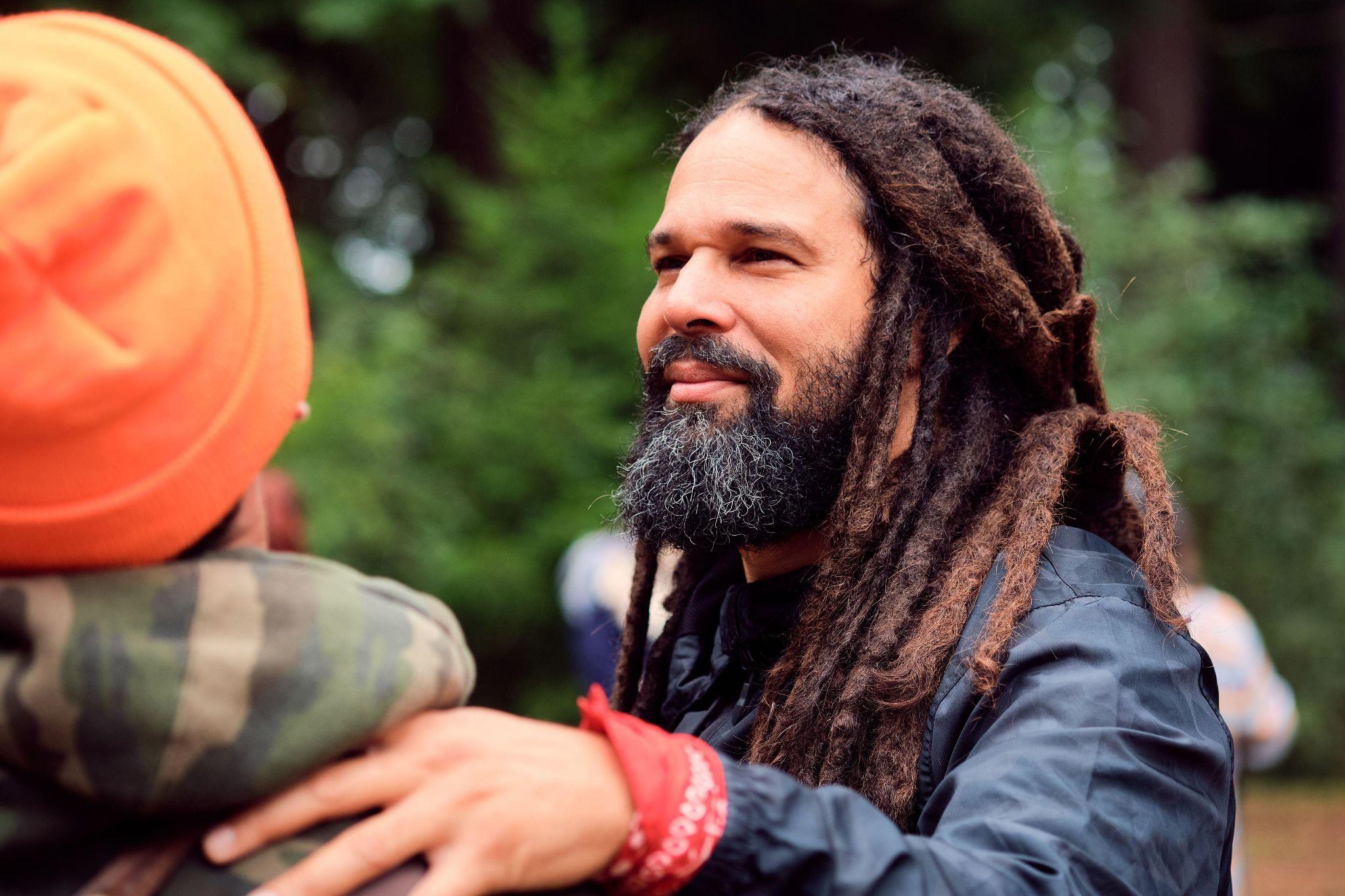
A man in leadership who is grounded, boundaried, and unafraid of what arises in the room transmits something the nervous system recognizes immediately: it is safe to go to the edge here, because the edge will hold. Masculine leadership creates safety through structure — the clarity of agreements, the firmness of time, the directness of naming what is happening.
It is a space where armor can loosen, where silence can speak, and where the weight of expectation can be set down, even if only for a moment.
Within this context, the presence of a male facilitator can create a field of grounded safety, compassionate witnessing and heart led engagement. Again, safety is not guaranteed by gender, but resonance can ease the nervous system’s guard, allowing men to meet themselves and one another more honestly. When participants — regardless of gender — feel a man truly seeing and witnessing them, not fixing them, not directing them, something in the nervous system relaxes at a primal level. This is the safety of being held, not just guided. Here we develop capacity.
In a culture that often equates manhood with performance, control and invulnerability, the male facilitator can offer something radically different: a return to embodied safety and feeling for all participants, connection and responsibility grounded not in dominance, but in presence. Here, the male facilitators are not asked to become someone new, but to remember what has been constrained—to rediscover a fuller spectrum of being, where strength and sensitivity can coexist, and where healing unfolds through honesty, brotherhood, and the courage to be seen. The value of creating a safe space for all participants, especially the women, is truly transformational.
Ways in which men lead
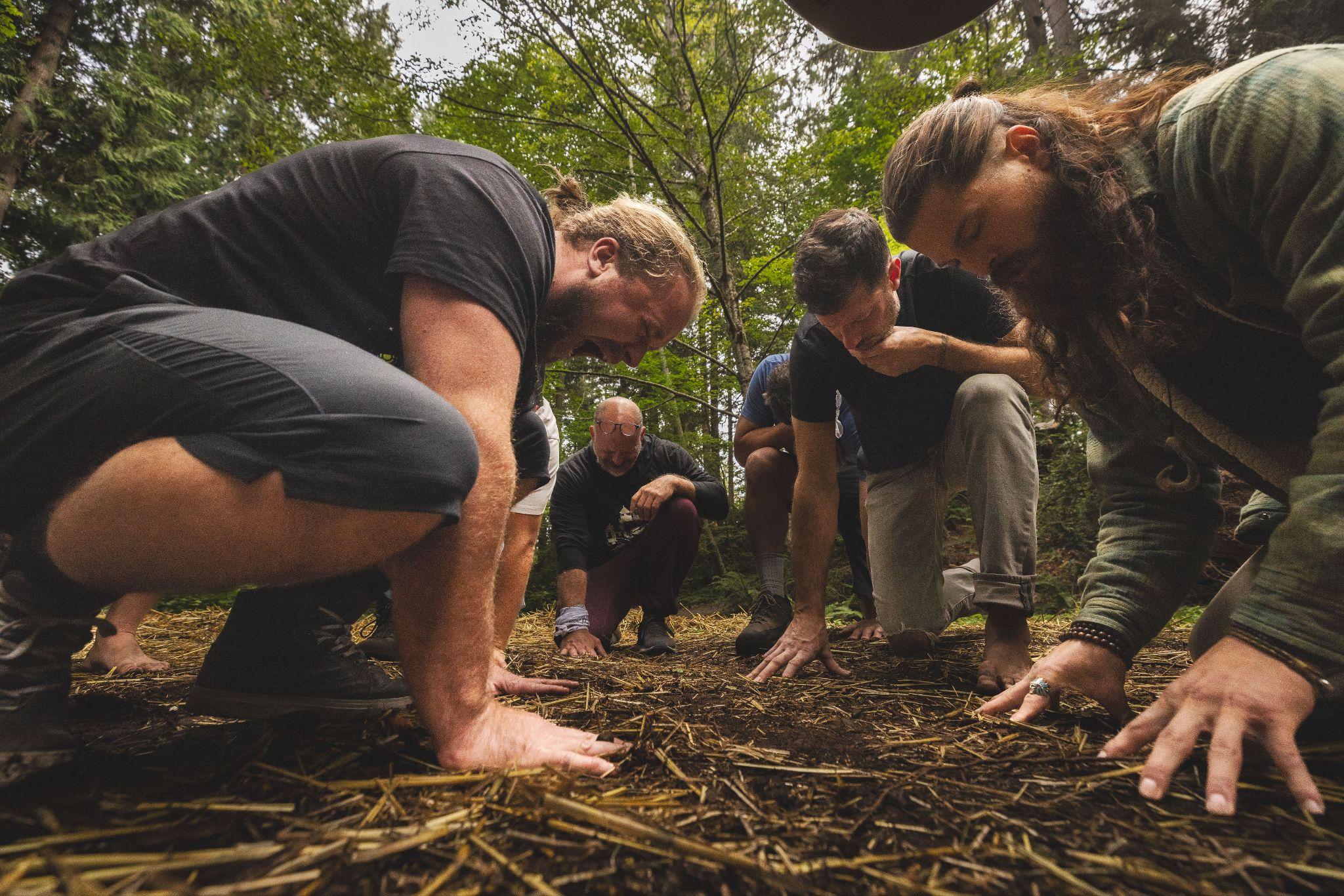
Mirroring and Permission — The Masculine Reversal
Just as women serve as mirrors of permission in specific ways, so do men — particularly:
- For other men, who need to witness a man being powerful without being dominating, emotionally present without performing, and accountable without self-destruction. Many men have never seen this modeled. Seeing it live, in a man they respect, can quietly rewrite their template of what masculinity is allowed to be.
- For women, who may carry deep wounds around masculine energy — betrayal, abandonment, control, or absence. A man who shows up consistently, who doesn't flinch at feminine emotion, who holds his ground without weaponizing it, begins to repair the blueprint of what masculine presence can feel like.
This repair cannot be done intellectually. It happens in the body, in real time, through sustained trustworthy presence
Listening as a full-body practice
Not the listening that waits to respond — but the kind that leans in, tracks affect, notices what is unsaid. When a man listens this way, openly and without agenda, it can be a genuinely new experience for people who have only known masculine attention as conditional or evaluative.
Holding the container without filling it
A grounded man creates space by not over-speaking. He names the frame, sets the agreements, and then steps back — trusting the room to do its work. Participants feel this as permission: the structure is steady so the process can be messy.
Naming what is present without fixing it
When tension, grief, or resistance arises, the male facilitator can say "I notice something shifting in the room" — and then remain still. He doesn't rush to resolve it. His willingness to sit with discomfort tells everyone else it is survivable.
Receiving emotion without deflecting
When a participant breaks open — weeps, rages, collapses into silence — the male facilitator who can meet that without fixing, advising, or spiritually bypassing demonstrates something many men have never witnessed: another man fully present to pain that is not his own.
Interrupting harmful dynamics directly but without aggression
When dominating speech patterns, dismissiveness, or harm emerges in the room, a grounded male facilitator can step in with clarity — not from moral authority, but from care for the container. He demonstrates that to intervene is not to attack; it is to love the space enough to protect it.
Catching himself and saying so
When he misreads a moment, over-directs, or steps past a boundary — he names it, owns it briefly, and course-corrects without theatrical self-punishment. Accountability modeled this way teaches: repair is possible and does not require collapse.
Deferring and yielding with dignity
In co-facilitation, a man who can pass the lead to his partner — especially a woman — without shrinking or over-explaining, models a form of strength that is rare and visible. Participants feel it: power shared is not power lost.
Holding the feminine without romanticizing or pathologizing it
A male facilitator who can honor feminine wisdom in the room — whether it arises in a woman, a man, or the collective — without diminishing it or elevating it to mythology, helps the whole group find a more honest ground.
Consistency over time as the deepest teaching
The most powerful thing a man can model is simply: he keeps showing up. Same integrity, session after session. The nervous system learns trust not from grand gestures but from accumulated ordinary reliability — the quiet proof that this one will not disappear.
Journal Prompts
Please be thorough with your responses. We suggest trying to express at minimum 100 words per prompt. Your answers will be emailed to you for your own records.