Introduction
About This Training
Acknowledgments and the Community Relational Training framework.
Community Relational Training
Acknowledgments
We would like to acknowledge and pay homage to this beautiful Grandmother Earth, all of our ancestors, mentors, teachers, family, partners and community members who made this work possible. This work exists because of all those who have paved the path before us, seen or unseen. It is developed through decades of dedicated hands-on research, shared knowledge and community input. We honor and thank the hundreds of men and women of all cultures who contributed to this living curriculum. With humble and honorable hearts we present the Community Relational Training.

To get the most out of this training, we recommend the following:
- Welcome again the “Beginner's Mind”Be Curious-Set aside your expectations, judgments and "expertness" and try things as if you've never seen or tried them before.
- Take a RiskOften, our mistakes are our best teachers.
- Learn FacilitationFocus on being a student, individual work is secondary
- FeedbackBe willing to receive and give feedback.
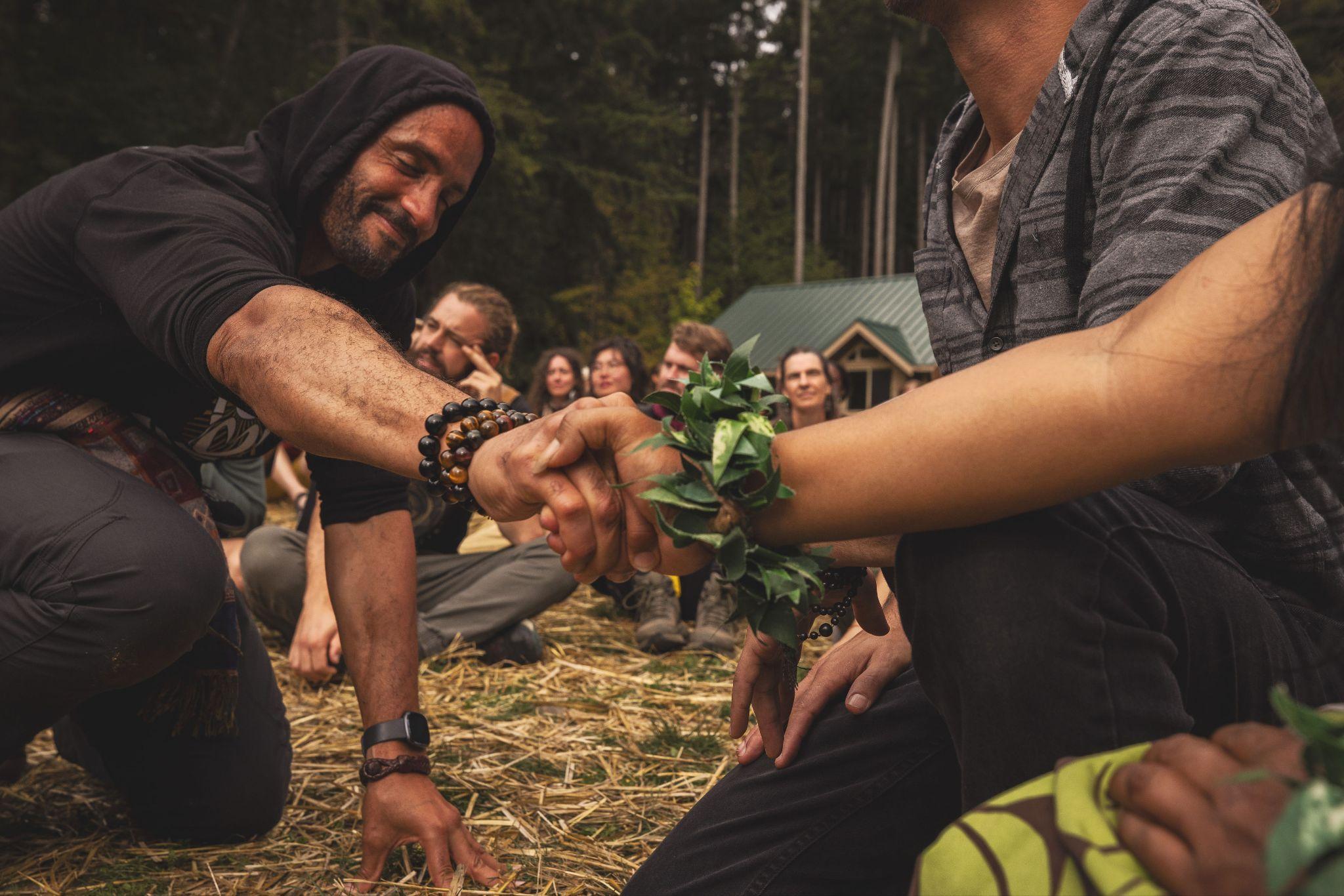
We’d like you to take a moment to reflect on your ‘why’ and your level of self-awareness and intention for this training. What do you feel is your Kuelana ( responsibility ). *Kuleana is a Hawaiian term best translated as responsibility, privilege, or right. It signifies a deep, reciprocal obligation to take care of oneself, the community, and the ‘āina (land), while holding the privilege to do so. It acts as both a duty and a personal, honorable responsibility.
When you step into a collective container for humanity, what is the medicine you bring forth and why?
Journal Prompts
- What is your, “Why” Your Kuleana? What is present for you right now?
- What personal experiences or life events have shaped your desire to guide or support others in healing or transformative processes?
- What leadership challenges or “miracle” moments have you experienced, in which you are proud of and keep you engaged in this transformative work?
- How do you envision how this work will be carried out into the world for the betterment of humanity?
Community Relational Training Framework
The modules that follow introduce the foundations of CRT and the essential skills for facilitating.
- Principles, Protocols & Community AgreementsEstablishing shared norms that sustain safety, trust, and respectful participation.
- Culture & CommunityOffering guiding cultural and ancestral ways that foster the right relationship, mutual understanding, shared responsibility, and collective care.
- Ethics, Safety, and Trauma-Informed FacilitationAnchoring the work in consent, boundaries, and ethical presence.
- Somatics, Physiology & EnergeticsLearn the importance of embodiment facilitation and be able to support all participants in reconnecting with their bodies, nervous systems, for group regulation and safety.
- Facilitator ToolkitUnderstanding your role, 8 skills of facilitation, practical tools, scripts.
- Along Side Each Other - The Art of CRT FacilitationCRT facilitation especially in transformative, community spaces requires extraordinary care, maturity, and integrity.
- CRT Group ProcessesExamples of group processes that hold the relational container and create spaces of safety, exploration, and connection through all levels of emotions.
- CRT Network of Trained FacilitatorsConnecting you to a living community of peers for ongoing support, learning, and encouragement.
- ConclusionCarrying the Circle forward — Bringing the Work Home: Leadership in Community.
- CRT Practicum Planning & Evaluation FormThe training culminates with a final project. All participants design, produce, and facilitate an offering to their community, one-day workshop, mini-class retreat, a sharing circle, or facilitating at Remembrance by Sacred Sons.
- CRT Facilitator Agreement(sign and turn in)
- References & Disclaimers & Contributor Bio’s