
Module 05
Facilitator Toolkit
Understanding your role, 8 skills of facilitation, practical tools, scripts.
Community Relational Training
Skillful facilitation requires more than intuition—it requires structure, language, and practice. The Facilitator Toolkit is a hands-on, applied section of the training designed to equip you with practical tools, clear scripts, and embodied practices that allow you to guide sessions with confidence and integrity.
This section focuses on helping you hold the relational container with steadiness—especially when emotion rises, conflict emerges, or silence deepens. You will learn how to track group dynamics in real time, respond rather than react, and guide participants through meaningful relational movement.
The Role of the Facilitator
In mixed-gender relational spaces, the facilitator serves as a steady guide for the community group process. You are not responsible for resolving every conflict or providing answers.You are responsible for creating inclusive and safe spaces for individuals to explore and expand their awareness to make transformational change.
When facilitators hold the container with awareness and steadiness, communities can face difficult truths while remaining connected. That capacity—to stay present with difference—is what allows real healing and relational repatterning to take place.

Here are descriptions for both roles:
Leader
The Leaders are the primary holder of the relational container. They set the tone, pace, and energetic field of the space from the moment they arrive. Their role is to track the group nervous system, read the room somatically, and guide the collective process with presence, clarity, and grounded authority. They are leading and guiding the group with the introductory processes, agreements, and making real-time decisions about when to slow down, deepen, redirect, or pause. The Leader models what it looks like to hold difference with steadiness — and in doing so, gives permission to the group to do the same. They are also working with their Facilitator to ensure equal representation and a harmonious balanced container.
Facilitator
The Facilitator is the relational backbone of the room. Where the Leader holds the wide view of the group process, the facilitator holds the ground — tracking individual participants, noticing who may be moving into activation or shutdown, and providing quiet, attuned presence to those on the edges of the experience. They are the eyes and witness to the collective nervous system of the participants, especially in the spaces where the leads cannot always reach. Their role requires them to stay regulated, unobtrusive, and deeply present — intervening with care when needed, and stepping back when the process is flowing. They do not run the room, but they help hold it. A skilled Facilitator makes the container feel safer without the group always knowing why. They work in close communication with the leads — before, during, and after — and their awareness, humility, and attunement are what allow the space to hold the full range of human experience.
*When you are enrolled in a process - you are a facilitator and be mindful of slipping too deeply into the role of participant.

Holding relational spaces between men and women requires more than good intentions. It calls for maturity, self-awareness, and the ability to stay present when emotions, histories, and differences surface.
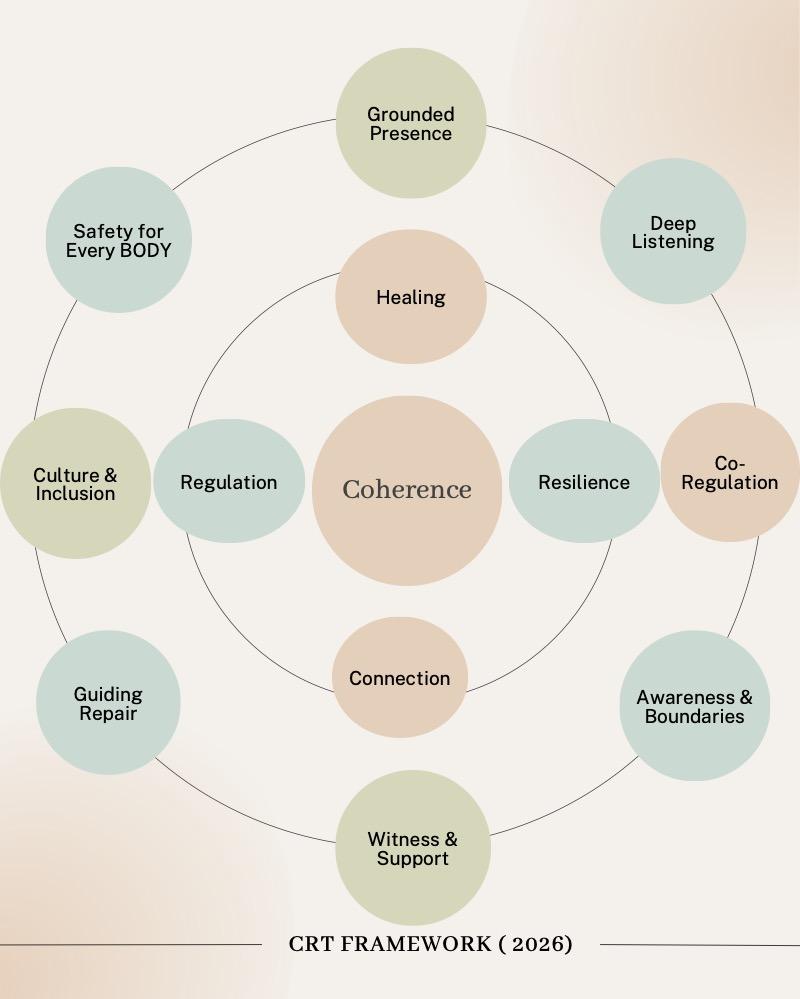
(MSR research findings 2024-2026)
These eight skills help CRT facilitators to guide groups with steadiness, clarity, and care.
Grounded Presence
The ability to remain calm, attentive, and grounded in the moment. A facilitator’s nervous system sets the tone for the room. When the facilitator remains regulated, the group is more likely to stay regulated as well. This might look like: a relaxed stance, inclusion by not having your back facing anyone, welcoming each individual with acknowledgement.
Deep Listening
Listening without interruption, correction, or preparing a response. Facilitators model attentive listening so participants can feel seen and heard without needing to defend or explain themselves. This might look like: taking a sacred pause when you feel you need to give advice or your perspective and allowing the other person to express themselves without interference, physical confirmation and deep compassion.
Co-Regulation
The capacity to stay steady when strong emotions arise.
Facilitators do not suppress emotion in the room, but they help contain it so expression can happen without escalation or harm. This might look like: gentle eye contact with each individual in the circle, warm smile and shared breath.
Awareness & Boundaries
Knowing when to allow expression and when to intervene. Clear boundaries protect the dignity of participants and ensure the space remains respectful and safe. This might look like: moving into a position of physical stance to ensure a boundary with your own body, using your words to enforce agreements or removing an individual for a boundary violation.
Witness & Support
Skillfully reflecting the emotional or relational dynamics in the room.
Guiding Repair
Supporting the group when misunderstandings or harm occur. Rather than avoiding tension, facilitators help participants acknowledge impact, listen to one another, and restore connection where possible.
This might sound like, “ What else is here for you?”
Culture & Inclusion
Facilitators remember that the goal is not agreement—it is relational understanding and growth. Your role is to keep the group oriented toward learning, accountability, and connection. This might sound like: “May we welcome all lineages and ancestors of the group into this space with reverence.” Also inviting people to process in their mother tongue.
Safety & Every BODY is Unique
Generalizing that all bodies are the same, does more harm and fragmentation than healing. Women’s bodies have a hormonal cycle; - which must be honored and understood to create a safe environment; ie: (women should not do cold plunges, inversions, excessive breathing, physical exertion during her late luteal phase). Your role is to create a safe space for ALL bodies to explore their healing and connection. This might sound and look like: “Let us all participate in our own capacity, please listen to your body and check-in, there is always space to simply rest, observe and hold space witnessing.”
Group & Collective Coherence
When all aspects are in unison, we experience; Healing, Connection, Regulation and Resilience.
When these four qualities arise together, the circle becomes more than the sum of its parts. Healing is no longer a private struggle—it moves through the group as a shared current, each person's return toward wholeness quietly permission-giving to the next. Connection reminds participants of what trauma made them forget: that they were never meant to carry this alone. Regulation spreads the way breath does—one settling nervous system inviting others to follow. And from that repeated experience of safety, repair, and being genuinely witnessed, resilience takes root—not as toughness, but as the capacity to be moved and still return. This is what you are tending as a facilitator. Not a perfect circle, but a living one.

- Signals to Slow Down, Pause, or InterveneEven in well-held spaces, moments of tension or overwhelm can arise. A skilled facilitator recognizes these signals early and responds with care.
These cues indicate it may be time to slow the process or intervene.
- Escalating EmotionVoices become louder, speech speeds up, or people begin interrupting one another.
Facilitator response: Slow the pace, invite breathing or grounding, and return the group to respectful listening.
- Defensive ReactionsParticipants begin justifying themselves, arguing, or attempting to prove their point rather than listening.
Facilitator response: Redirect toward curiosity and reflection rather than debate.
- Withdrawal or SilenceParticipants shut down, avoid eye contact, or disengage from the conversation.
Facilitator response: Pause the conversation and check in with the group’s emotional capacity.
- One Voice DominatingA single participant begins to control the conversation or repeatedly interrupts others.
Facilitator response: Gently redirect so space is shared.
- Emotional FloodingSomeone becomes overwhelmed—crying intensely, dissociating, or appearing unable to stay present.
Facilitator response: Pause the process and support grounding before continuing.
- Transference & CountertransferenceA participant projects past emotions or relational patterns onto the facilitator or others in the room, or the facilitator's own unresolved material is activated by a participant or group dynamic.
Facilitator response: Stay grounded and non-reactive. Do not take the charge personally or encourage dependency. Name the dynamic gently if needed, hold your role clearly, and debrief with your co-facilitator after the session.
How Facilitators Can Navigate Transference
Ethical facilitation means recognizing transference when it arises and handling it with compassion, humility, and clear boundaries.
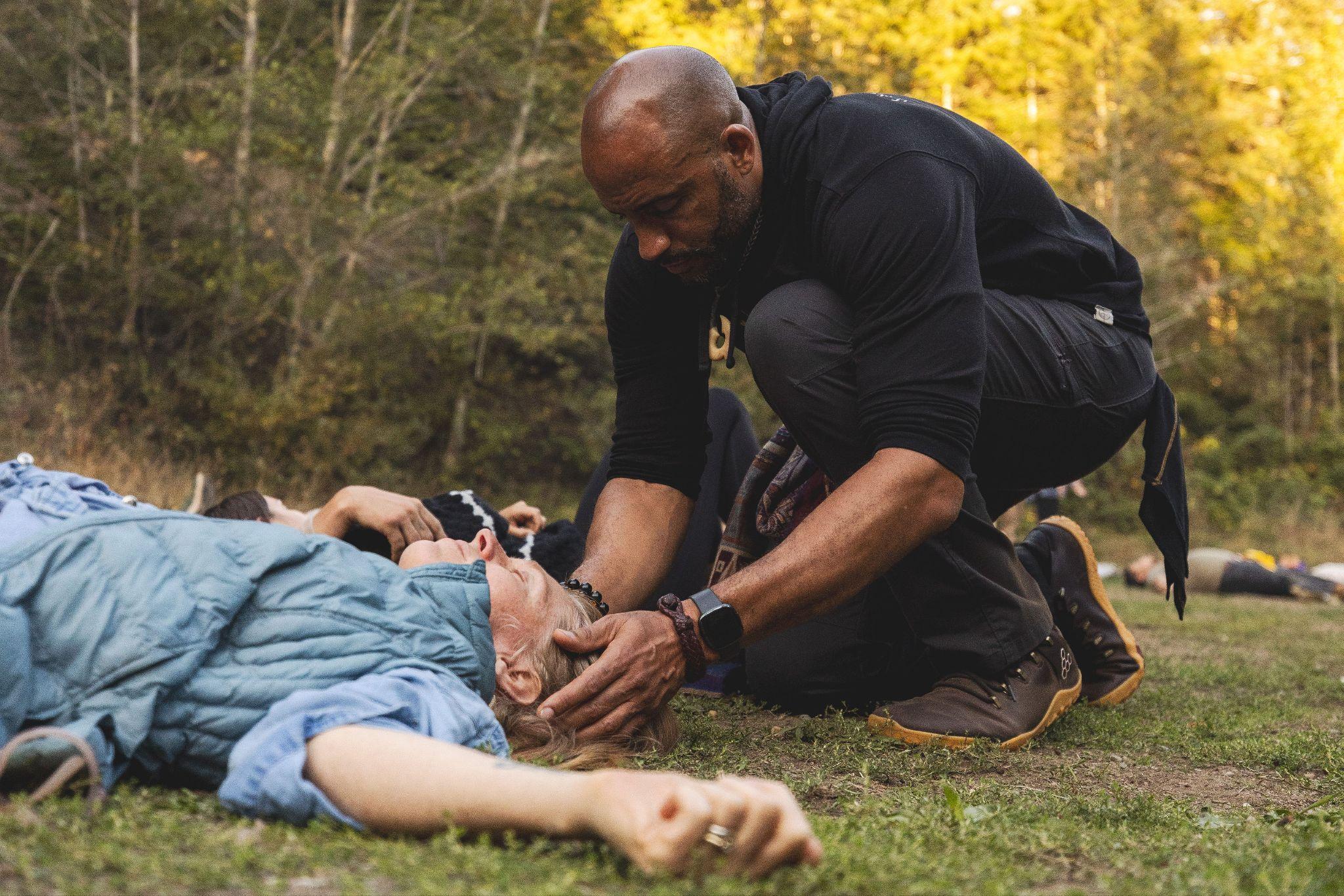
Transference is a psychological dynamic where participants unconsciously project past emotions, expectations, or experiences onto the facilitator or others in the group. These projections often stem from unresolved relationships with authority figures, caregivers, or past trauma.
In group process, transference might show up as:
- Idealizing or elevating the facilitator (“You have all the answers”)
- Reacting with anger, distrust, or resistance toward the facilitator
- Seeking emotional caretaking or validation
Countertransference is a psychological and relational dynamic that occurs when a facilitator, therapist, or healer unconsciously projects their own emotions, unresolved issues, or personal history onto a client or participant. It is especially important to be aware of in healing, therapeutic, and somatic settings. Originally a psychoanalytic concept, it now plays a major role in trauma-informed, body-based, and relational work, where facilitators may feel triggered, overly attached, overly protective, judgmental, or even infatuated with a participant.
- Rescuer Mode
- Emotional Reactivity
- Idealization or Aversion
- Caretaking or Over-GivingWhy does this matter?
Transference is natural and not wrong, but if left unacknowledged, it can:
- Disrupt group dynamics
- Harm the emotional safety of participants
- Create unhealthy dependencies
- Lead to facilitator burnout or ego inflation
Facilitator Response to Transference & Countertransference:
Do Your Own Inner Work
- Stay connected to your personal healing journey.
- Get supervision, peer support, or therapy to explore your own countertransference (your reactions to others’ projections).
Hold Healthy Boundaries
- Maintain a clear and consistent facilitator role—not friend, therapist, or savior.
- Resist the urge to "fix," rescue, or overly caretake.
- Use language that empowers participants to find their own wisdom.
Normalize Emotional Responses
- Gently reflect if you sense strong transference: “Sometimes in healing spaces, people experience strong feelings toward the facilitator. That’s okay and part of the process.”
- Allow space for feelings, without taking them personally or needing to explain them away.
De-Personalize Praise or Criticism
- Be gracious, but grounded when receiving praise: “Thank you. I hope what’s unfolding here is coming from within you too.”
If criticism or emotional reactivity arises, remain calm and non-defensive. Center the circle’s agreements and safety.
Facilitators may also unconsciously project their own past onto participants. This might look like:
- Over-identifying with someone's pain
- Avoiding a participant who triggers your own discomfort
- Feeling the urge to prove, impress, or correct
Staying grounded in self-awareness, supervision, and regular reflection helps keep the space clear and ethical.
Countertransference is not a failure—it’s a signal.
When recognized and integrated, it becomes a powerful tool for self-awareness, ethical practice, and deepening one’s presence as a facilitator.
Facilitator Grounding Protocol (When the Room Becomes Intense)

When you notice escalation in the room:
1. Pause the process Slow the conversation. Interrupt escalation with calm authority.
Regulate yourself first Feel your feet, slow your breath, soften your body.
3. Name what you observe Use neutral language to acknowledge the shift in the room.
4. Reconnect the group to the container Remind participants of the agreements and purpose of the space.
5. Invite reflection before response Encourage participants to speak from personal experience rather than accusation.
Important Reminder for Facilitators
- Strong emotion is not the problem. Disconnection is the problem.
- Your role is to hold the bridge so people can move through difficult moments without abandoning themselves or one another.
Somatic Awareness in Facilitation
Facilitators must learn to observe everyone’s body as carefully as they listen to their actions and words. Participants may verbally express agreement or calm while their bodies communicate something very different. Signs such as shallow breathing, muscle tension, rigid posture, fidgeting, dissociation, or emotional flooding may indicate that the nervous system is entering a survival response. Somatic awareness allows facilitators to recognize when a process is becoming overwhelming and when the group may need grounding, slowing down, or additional support.
Somatic Exercises for facilitators - use these 10 somatic practices to help yourself and your group.
Orienting
Slowly look around your environment and let your eyes land on neutral or pleasant objects. This tells your nervous system: “I’m safe right now.”
Physiological Sigh
Inhale through the nose, then take a second short inhale, followed by a long slow exhale through the mouth. Repeat 3–5 times. This quickly calms the stress response.
Extended Exhale Breathing
Breathe in for 4, out for 6–8. Longer exhales activate the parasympathetic (rest-and-digest) system.
Body Scan Awareness
Bring attention slowly through your body, noticing sensations without judgment. This builds interoception (your ability to feel from within).
Pendulation
Gently move attention between a place of discomfort and a place of ease in your body. This helps your system process stress without being overwhelmed.
Shaking / Neurogenic Tremoring
Let your body shake, bounce, or tremor (like animals do after stress). This helps the nervous system reset.
Self-Holding (Containment)
Place one hand on your heart and one on your belly (or hug yourself). This creates a sense of internal safety and support.
Grounding Through the Feet
Stand or sit and press your feet into the floor. Notice the support beneath you—this helps regulate anxiety and dissociation.
Humming or Toning
Gently hum or chant. This stimulates the vagus nerve and can create a soothing internal vibration.
Resourcing
Bring to mind a person, place, or memory that feels safe or nourishing.
Let your body feel that experience—not just think it.
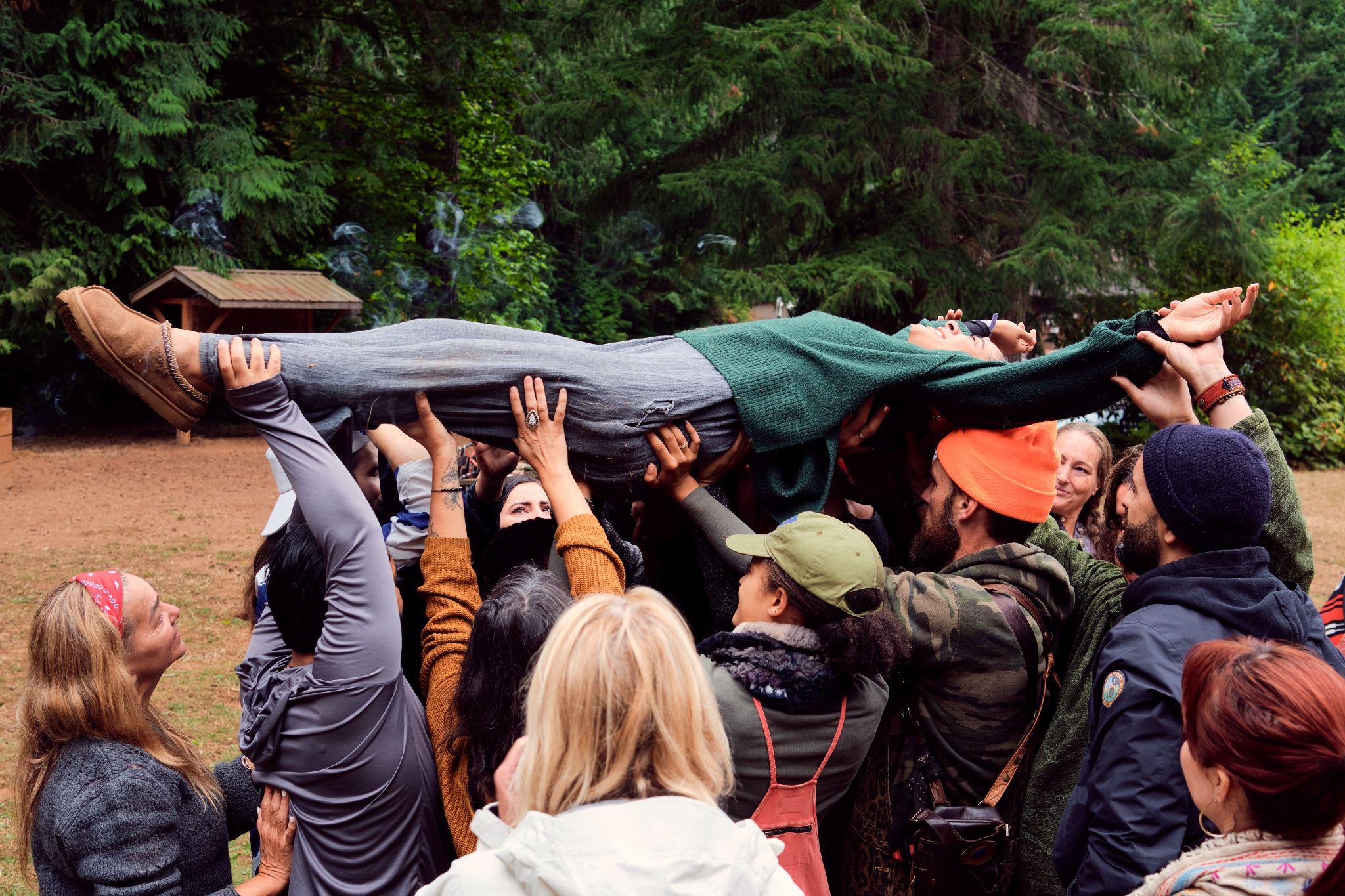
Trauma-Sensitive Somatic Regulation Script (5–10 minutes)
“Begin by finding a position that feels supportive. You might be sitting, lying down, or leaning against something. Let your body be held… even just a little.
Take a moment to arrive.
There’s nothing you need to change. Nothing you need to fix.
Just notice… that you are here.”
“Now, gently let your eyes look around your space.
Slowly… without rushing.
You might let your gaze land on something neutral… or something that feels even slightly pleasant.
Notice colors… shapes… light.
And if it feels okay, let your head move a little with your eyes.
You are allowed to choose where you look. You are allowed to stop at any time.”
“Now, bring awareness to your body… just a small part.
Maybe your hands.
Notice any sensation there… warmth, coolness, tingling… or even nothing at all.
If that feels like too much, you can go back to looking around the room.
You can always move between inside and outside.”
“Gently, you might try a small movement.
Maybe pressing your fingers together… or shifting your shoulders slightly.
Very small. Almost like a whisper of movement.
Notice what that feels like… without needing it to be any particular way.”
“If it feels supportive, bring one hand to your heart… and one to your belly… or anywhere that feels okay.
Feel the contact.
The warmth… the pressure…
Let your body receive that support.”
“Now, if it feels safe enough, take a slow breath in through your nose…
And a longer, softer breath out through your mouth.
No need to force it.
Just allowing the exhale to be a little longer.
You might repeat this a few times… or return to natural breathing whenever you like.”
“At any point, you can pause.
You can stop.
You can open your eyes wider, shift your body, or take a break.
You are in control of this experience.”
“Before closing, take a moment to notice:
Is there even 1% more ease somewhere in your body?
If yes, gently let your attention rest there.
If not, that’s okay too.
Just notice what is true.”
“When you’re ready, begin to come back.
Maybe deepen your breath… wiggle your fingers or toes…
And slowly reorient to your space.
Take your time.